
What Are Bio Medical Waste Bags and Why Are They Important?
Biomedical waste management is one of the most important pillars of healthcare safety. Whether it is a small clinic, a large hospital, a pathology lab, a dental practice, or even a home-care environment, every place where medical treatments happen produces waste. Not all waste is dangerous, but a major portion of it carries infections, harmful chemicals, sharp objects, or body fluids. This type of waste requires special handling, and the most important tool for safe disposal is the Bio Medical Waste Bag.
In this detailed guide, we will explore what biomedical waste bags are, how they are made, why they matter, what standards they must follow, and how choosing the right bags from trusted Bio Medical Waste Bags Manufacturers in Ahmedabad ensures complete safety and compliance. This content includes deep explanations to ensure every customer finds the answer they need in one place.
What Exactly Is Biomedical Waste?
Biomedical waste, also called clinical or infectious waste, includes:
- Waste generated during diagnosis
- Waste from treatment or surgery
- Laboratory waste
- Research waste
- Animal research waste
- Medical device disposal
- Waste from vaccination and sample collection
Some common examples include:
- Used cotton, gauze, swabs
- Human tissues or organs
- Blood-soaked pads
- Syringes, needles, blades
- Catheters, IV sets
- Expired or discarded medicines
- Laboratory cultures
- Contaminated gloves, masks, PPE kits
Biomedical waste can spread diseases like hepatitis, HIV, bacterial infections, and other harmful pathogens if not managed properly. In India, the Biomedical Waste Management Rules, 2016 (amended in 2018 & 2019) strictly regulate how these wastes must be segregated, stored, transported, and treated.
What Are Biomedical Waste Bags?
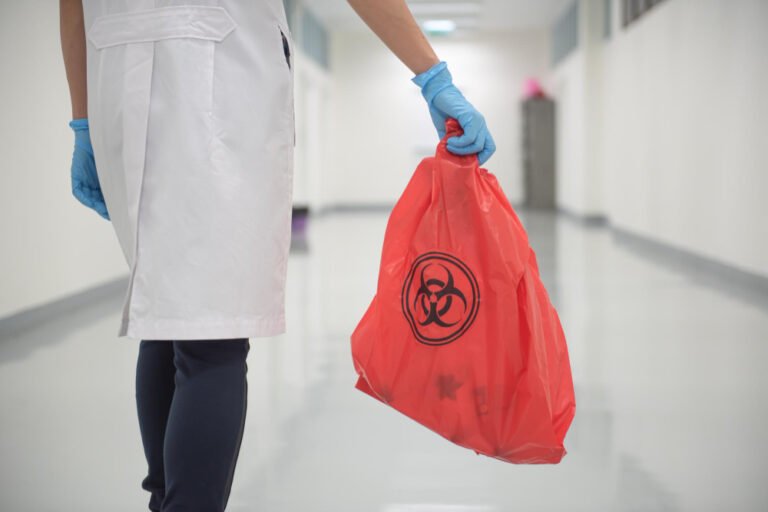
Biomedical waste bags are specially designed disposal bags made from high-strength polymers that are used to safely contain, store, transport, and dispose of infectious or hazardous medical waste. They are not ordinary plastic bags, they must follow strict standards.
Key Features of Biomedical Waste Bags
- High-Density Material: They are made from strong, medical-grade polymers such as HDPE (High-Density Polyethylene) or LDPE blends that resist tearing.
- Non-Chlorinated Plastic: Government guidelines mandate that bags must be free from chlorine to ensure safe incineration.
- Leak-Proof Construction: Biomedical waste can include liquids, blood, or infected discharge. Bags must prevent leakage at all times.
- Durability & Puncture Resistance: Waste may contain sharp or pointed objects. Bags should resist punctures under pressure.
- Clear Print with Biohazard Symbol: A mandatory requirement to identify the type of waste inside.
- Color Coding Compliance: India follows a strict color-coded classification system for different types of medical waste.
How Biomedical Waste Bags Are Manufactured
Most people do not know that manufacturing a biomedical waste bag involves multiple quality tests and strict regulatory checks. Reliable Bio Medical Waste Bags Manufacturers in Ahmedabad follow these steps:
Step 1: Raw Material Selection
Manufacturers use:
- HDPE granules
- LDPE granules
- Non-chlorinated plastic compounds
These materials ensure tensile strength, heat resistance, and proper incineration without toxic smoke.
Step 2: Blown Film Process – The material is melted and blown into thin sheets of plastic film. The thickness usually ranges from 40 to 60 microns, depending on the category.
Step 3: Cutting and Sealing – The sheets are cut into bags and sealed using heat sealing to create leak-proof bottoms.
Step 4: Printing – Mandatory information is printed, including:
- Biohazard symbol
- Waste category
- Bag capacity
- Disposal instructions
- Manufacturing details
- Date and batch number
Step 5: Testing – High-quality manufacturers conduct tests for:
- Leak resistance
- Tear resistance
- Drop test
- Puncture resistance
- Chemical resistance
This ensures that bags do not tear or leak during usage.
Why Are Biomedical Waste Bags Important?
Biomedical waste bags are the foundation of safe hospital waste management. Without them, waste segregation becomes impossible, and infectious materials can mix with regular garbage, posing a huge public health risk.
Let’s understand their importance in detail:
1. Prevents Spread of Infection
Healthcare waste often contains viruses, bacteria, and harmful pathogens. If not sealed properly, infectious waste can easily contaminate surfaces, air, and water. Biomedical waste bags ensure:
- No direct contact
- No exposure to air
- No risk of contamination
- Safe temporary storage
This protects medical staff, sanitation workers, and patients.
2. Supports Safe Waste Segregation
Segregation is the first and most critical step in waste management. Biomedical waste bags allow hospitals to classify waste into:
- Infectious
- Recyclable
- Sharps
- Glass
- Pathological waste
Proper segregation prevents mixing different categories, which could otherwise increase treatment cost and environmental damage.
3. Helps Healthcare Facilities Meet Legal Compliance
Indian guidelines require healthcare facilities to:
- Use correct color-coded bags
- Label waste correctly
- Follow disposal timelines
- Maintain waste records
- Use authorized treatment facilities
- Non-compliance can lead to:
- Heavy penalties
- License cancellation
- Environmental damage
- Legal cases
High-quality bags from certified manufacturers help hospitals strictly follow these rules.
4. Protects Waste Handlers and Disposal Teams
Waste handlers are at high risk of injury and infection if waste is not stored in proper bags. Biomedical waste bags reduce exposure to:
- Sharp objects
- Blood-contaminated items
- Toxic chemicals
- Disease-causing pathogens
Strong, leak-proof bags protect those who collect, transport, and dispose of waste.
5. Ensures Safe Transportation of Waste
After waste is sealed, it must be transported to a Common Biomedical Waste Treatment Facility (CBWTF). During transportation, there should be:
- No spills
- No odors
- No leakage
- No accidental tearing
High-quality bags maintain integrity even under weight and movement.
Color Coding System for Biomedical Waste Bags
India follows a 4-color coding system, and strictly using these colors is essential to maintain hygiene and compliance.
Yellow Bags – Incineration Waste
Used for:
- Human anatomical waste
- Soiled waste (blood-soaked pads, cotton)
- Expired medicines
- Microbiology cultures
- Isolation ward waste
These bags are made for incineration and must be non-chlorinated.
Red Bags – Contaminated Recyclable Waste
Used for:
- Tubes
- Catheters
- Gloves
- IV sets
- Syringes (without needles)
These items are disinfected first and then recycled.
White Containers – Sharps
Used for:
- Needles
- Scalpels
- Blades
- Surgical knives
The containers are puncture-proof to avoid injuries.
Blue Bags – Glass and Metallic Waste
Used for:
- Broken glass
- Medicine vials
- Ampoules
- Laboratory glass
These items are cleaned and recycled.
How Hospitals Should Use Biomedical Waste Bags
Hospitals and healthcare centers must follow proper steps:
1. Place Bags at Every Generation Point: Bags must be placed at:
- Operation theaters
- OPD
- ICU
- Wards
- Laboratories
- Dressing rooms
- Dental clinics
2. Do Not Overfill: Bags should be filled only up to three-fourths capacity to avoid bursting.
3. Tie the Bag Securely: Bags should be closed with strong ties or non-metallic strings.
4. Label the Bag: Each bag must include:
- Date
- Name of facility
- Waste category
This is required by law.
5. Move Waste to Temporary Storage Room: Waste should be stored in a designated, well-ventilated room.
6. Handover to CBWTF: Authorized waste disposal agencies collect and treat waste using:
- Autoclaving
- Microwaving
- Incineration
- Shredding
Environmental Importance of Biomedical Waste Bags
Biomedical waste is dangerous for nature. If not handled correctly, it can:
- Pollute rivers and lakes
- Harm soil quality
- Spread toxins in air
- Affect wildlife
- Enter the food chain
Using certified biomedical waste bags ensures that:
- Waste is burnt at safe temperatures
- Plastics do not release toxic fumes
- Liquids do not leak into soil
- Waste is recycled properly
This supports sustainability in healthcare.
Why Hospitals Should Buy from Reliable Manufacturers
Not all bags available in the market meet medical standards. Poor-quality bags:
- Tear easily
- Leak infectious material
- Cannot handle heavy load
- Fade or lose color
- Don’t meet legal requirements
Hospitals should use bags only from experienced Bio Medical Waste Bags Manufacturers in Ahmedabad because they understand:
- Government rules
- Color coding norms
- Correct bag thickness
- Sterility and safety standards
- Waste treatment compliance
This ensures zero risk and full reliability.
Why Choose Aarvi Touch?
As a trusted Surgical Product wholesaler, Aarvi Touch supplies high-quality biomedical waste bags and a wide range of surgical products. Their focus on hygiene, safety, and compliance has made them a preferred choice for:
- Hospitals
- Clinics
- Laboratories
- Dental practices
- Nursing homes
Their products are:
- Strong
- Durable
- Leak-proof
- Government compliant
- Available in all sizes and colors
With strict quality checks and reliable manufacturing partners, they ensure every bag supports safe, hygienic biomedical waste disposal.
Frequently Asked Questions
1. Are biomedical waste bags compulsory?
Yes, every healthcare facility must use color-coded biomedical waste bags as per government rules.
2. Can general plastic bags be used?
No. They are not safe, not legal, and not recommended.
3. What is the thickness of biomedical waste bags?
Usually between 40–60 microns, depending on waste type and bag size.
4. How long can biomedical waste be stored?
Not more than 48 hours.
5. Where can I buy certified biomedical waste bags?
You should purchase from certified Bio Medical Waste Bags Manufacturers in Ahmedabad to ensure quality and compliance.
Conclusion
Biomedical waste bags are the backbone of safe healthcare waste management. They protect staff, patients, sanitation workers, and the environment. Using the right bags not only ensures safety but also keeps healthcare facilities legally compliant. Choosing high-quality bags from trusted suppliers helps ensure hygiene, safety, and professional standards in every healthcare setting. If you need strong, durable, and certified biomedical waste bags or any other medical supplies, we are here to help. Call us today!