
N95 Mask vs Surgical Mask: Which Is Better for Hospitals?
In modern healthcare settings, safety and infection control are more important than ever. Hospitals rely heavily on high-quality protective gear to safeguard both patients and healthcare workers. Among the most essential items are masks but choosing the right type can be confusing. Should hospitals use N95 masks or surgical masks? At Aarvi Touch, a trusted provider of surgical essentials, understanding the difference between these masks is crucial for making the right decision. Whether you’re managing a hospital, clinic, or healthcare facility, selecting the right mask can significantly impact safety and efficiency.
This blog will break down the differences, benefits, and ideal usage of N95 and surgical masks to help you determine which is better suited for hospitals.
What Is an N95 Mask?
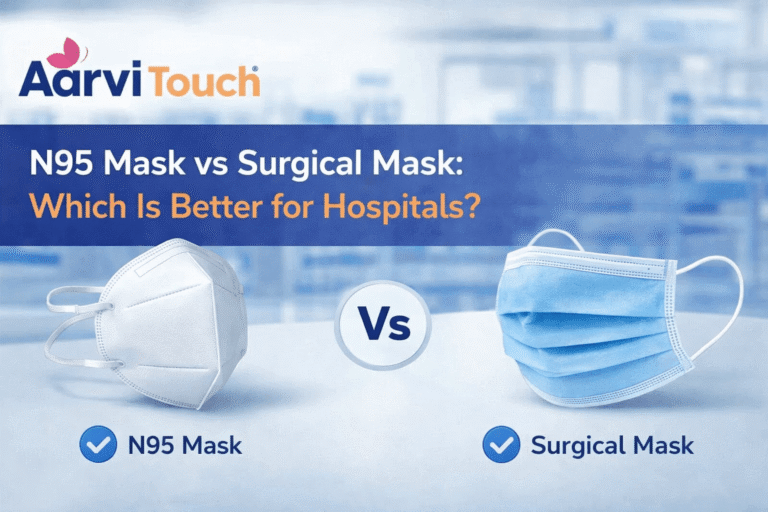
An N95 mask is a type of respirator designed to provide a very close facial fit and highly efficient filtration of airborne particles. It can filter at least 95% of very small particles, including bacteria and viruses. Unlike regular masks, N95 masks are tightly sealed around the nose and mouth, preventing air leakage. This makes them highly effective in environments where airborne infections are a concern. Healthcare professionals often use N95 masks in high-risk areas such as intensive care units, operation theatres, and during procedures that generate aerosols.
What Is a Surgical Mask?
A surgical mask is a loose-fitting, disposable mask designed to protect against large droplets, splashes, or sprays of bodily fluids. These masks act as a barrier but do not provide complete protection against airborne particles. They are commonly used in general hospital settings where the risk of airborne transmission is lower. Surgical masks are more comfortable for long hours and are easier to wear compared to N95 masks. At Aarvi Touch, both N95 and surgical masks are part of a comprehensive range of protective products designed to meet various healthcare needs.
How Do N95 and Surgical Masks Differ?
The primary difference lies in protection, fit, and filtration efficiency. N95 masks offer superior filtration and a tight seal, making them ideal for high-risk environments. On the other hand, surgical masks provide basic protection and are more suitable for general use. Another key difference is breathability. N95 masks can feel tighter and slightly harder to breathe through, especially during extended use. Surgical masks, being lighter and looser, are more comfortable for daily wear. Hospitals must carefully evaluate where and when each type of mask should be used. This ensures both safety and practicality.
Which Mask Offers Better Protection in Hospitals?
When it comes to protection, N95 masks are the clear winner. They are specifically designed to filter airborne particles and prevent inhalation of harmful pathogens. This makes them essential in situations involving infectious diseases like COVID-19, tuberculosis, or other respiratory illnesses. However, this does not mean surgical masks are ineffective. They play a crucial role in preventing the spread of infections from healthcare workers to patients and vice versa. In many hospital areas, surgical masks provide sufficient protection. The choice ultimately depends on the level of risk involved.
When Should Hospitals Use N95 Masks?
N95 masks are best used in high-risk scenarios where airborne transmission is possible. These include:
- During surgeries or procedures that generate aerosols
- While treating patients with contagious respiratory diseases
- In intensive care units or isolation wards
In such situations, the advanced filtration of N95 masks ensures maximum protection for healthcare professionals. As a Surgical Product Wholesaler in Mehsana, Aarvi Touch supplies certified N95 masks that meet healthcare standards and ensure reliability in critical environments.
When Are Surgical Masks the Right Choice?
Surgical masks are ideal for low to moderate-risk situations. They are commonly used in outpatient departments, general wards, and during routine patient interactions. These masks help reduce the spread of infections through droplets and are suitable for both healthcare workers and patients. Because they are lightweight and cost-effective, surgical masks are widely used in hospitals for everyday protection.
Are N95 Masks Always Better Than Surgical Masks?
Not necessarily. While N95 masks offer higher protection, they are not always required in every hospital setting. Overusing N95 masks can lead to unnecessary costs and discomfort for healthcare workers. Hospitals need to strike a balance between safety and practicality. Using N95 masks only where needed and surgical masks in general settings is often the most efficient approach. At Aarvi Touch, the focus is on helping healthcare providers choose the right products based on their specific requirements.
What About Comfort and Usability?
Comfort is an important factor, especially for healthcare workers who wear masks for long hours. Surgical masks are generally more comfortable and easier to wear for extended periods. N95 masks, due to their tight fit, may cause discomfort if worn continuously without breaks. They also require proper fitting and training to ensure effectiveness. Hospitals should consider staff comfort along with safety when deciding which masks to use.
Cost Comparison: N95 vs Surgical Masks
Cost is another significant factor for hospitals. N95 masks are more expensive due to their advanced filtration technology and design. Surgical masks, on the other hand, are more affordable and suitable for bulk use. For large healthcare facilities, using a combination of both masks can help manage costs effectively without compromising safety. Being a reliable Surgical Product Wholesaler in Mehsana, we offers competitive pricing and bulk supply options to support hospitals in managing their resources efficiently.
How to Choose the Right Mask for Your Hospital?
Choosing between N95 and surgical masks depends on several factors, including the level of exposure risk, type of procedures performed, and budget constraints. Hospitals should assess their needs and create clear guidelines for mask usage in different departments. This ensures that healthcare workers are protected while resources are used wisely. We ensures access to high-quality products that meet safety standards.
Why Quality Matters in Surgical Products?
In healthcare, there is no room for compromise when it comes to quality. Low-quality masks can fail to provide adequate protection, putting both patients and staff at risk. This is why sourcing products from a reliable supplier is crucial. We offers a wide range of certified surgical products, including gloves, PPE kits, diagnostic kits, and waste disposal solutions. Their commitment to quality and reliability makes them a preferred Surgical Product Wholesaler in Mehsana for hospitals and healthcare facilities.
The Role of Aarvi Touch in Healthcare Safety
Aarvi Touch is dedicated to supporting healthcare providers with high-quality surgical and protective products. From disposable gloves to advanced diagnostic kits, their product range is designed to meet the evolving needs of the medical industry. By offering reliable and cost-effective solutions, we helps hospitals maintain high standards of safety and care. Whether it’s N95 masks for critical care or surgical masks for general use, we ensures that healthcare professionals have access to the best products available.
Final Thoughts: Which Mask Should Hospitals Choose?
The choice between N95 and surgical masks is not about which one is better overall, it’s about which one is better for a specific situation. N95 masks provide superior protection and are essential in high-risk environments. Surgical masks, on the other hand, are practical, comfortable, and suitable for everyday use in hospitals. A balanced approach, using both types of masks where appropriate, is the best strategy for ensuring safety and efficiency. Hospitals can confidently source the right products and maintain the highest standards of healthcare safety. Book your order today!
Frequently Asked Questions
1. What is the main difference between N95 and surgical masks?
N95 masks offer higher filtration and a tight seal, while surgical masks provide basic protection against droplets.
2. Can surgical masks protect against viruses?
They can reduce the spread of viruses through droplets but are less effective against airborne particles compared to N95 masks.
3. Are N95 masks reusable?
Some N95 masks are designed for limited reuse under specific guidelines, but most are intended for single use in healthcare settings.
4. Which mask is more comfortable?
Surgical masks are generally more comfortable for long-term wear due to their loose fit.
5. Do hospitals need both types of masks?
Yes, hospitals typically use both N95 and surgical masks depending on the level of risk and type of procedures.
6. Are N95 masks mandatory in hospitals?
They are mandatory in high-risk situations but not required in all areas of a hospital.
7. How should masks be stored in hospitals?
Masks should be stored in a clean, dry environment to maintain their effectiveness.
8. Why is fit important for N95 masks?
A proper fit ensures that no unfiltered air enters through gaps, providing maximum protection.
9. Where can hospitals source high-quality masks?
Hospitals can rely on trusted suppliers like Aarvi Touch for certified surgical products.
10. How can hospitals reduce mask costs?
By using N95 masks only in high-risk areas and surgical masks for general use, hospitals can manage costs effectively.