
Common Biomedical Waste Management Mistakes and Their Risks
Hospitals, clinics, labs, and pharma companies produce biomedical waste every day. This includes used gloves, syringes, blood-stained dressings, expired chemicals, and sharps. If this waste is handled the right way, it is safe. If it is handled carelessly, it can cause infections, harm the environment, and lead to legal problems.
India has clear rules for biomedical waste management. Even so, many healthcare facilities still make simple mistakes while segregating, storing, and disposing of this waste. In this guide, Aarvi Touch explains the most common biomedical waste management mistakes, the risks they bring, and how to avoid them. The goal is simple: help your facility stay safe, compliant, and ready for any audit.
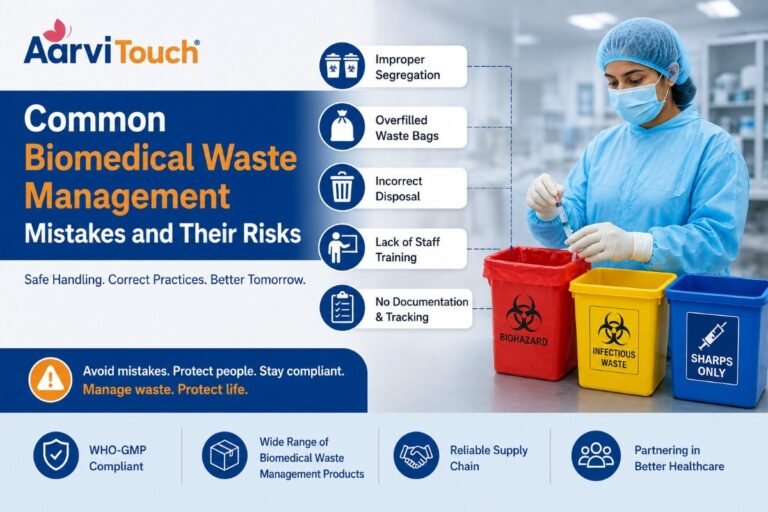
Why Biomedical Waste Management Matters
Biomedical waste is not like regular household or office trash. It can carry germs that spread hepatitis, HIV, and other infections. Anyone who comes in contact with it is at risk, nurses, cleaning staff, waste handlers, and even people outside the facility if the waste is not disposed of properly.
Good biomedical waste management protects three things:
- People — staff, patients, waste handlers, and the community
- The environment — soil, water, and air quality
- The facility — its legal standing, accreditation, and reputation
Bodies like the Central Pollution Control Board (CPCB) and State Pollution Control Boards (SPCBs) require every healthcare facility to follow strict rules for segregation, storage, and disposal. But in daily operations, gaps still happen. This is usually because of poor training, cost-cutting, or using the wrong equipment. For facilities across Gujarat, daily patient load often takes priority, and waste protocols can slip. It is far easier and cheaper, to fix these gaps early than to deal with the fallout after an inspection or an actual exposure incident.
Common Biomedical Waste Management Mistakes
1. Improper Segregation at Source
This is the most common mistake. Biomedical waste must be sorted into color-coded bags, yellow, red, white, and blue, right where it is generated. If sharps end up in a yellow bag, or infectious waste mixes with general waste, the whole batch becomes harder and riskier to handle later.
2. Using the Wrong or Low-Quality Waste Bags
Not all waste bags are the same. Thin, low-quality bags tear easily, leak fluids, and fail to meet the puncture-resistance standards needed for sharps and infectious waste. Facilities that try to save money here often end up with contaminated storage areas and higher risk for staff. This is why it matters to source bags from certified Bio Medical Waste Bags Manufacturers in Ahmedabad. Bags that meet CPCB standards greatly reduce the chance of leaks, punctures, and spills.
3. Overfilling Sharps Containers
Sharps containers should only be filled to about three-quarters of their capacity. Overfilling raises the risk of needle-stick injuries during handling, transport, and final disposal. This is one of the most common and most preventable, workplace hazards in healthcare.
4. Poor Labeling and Barcoding
Every biomedical waste bag and container should have a clear biohazard symbol, the date it was generated, and the department it came from. Barcoding should be added where required. Missing or unclear labels make it hard to trace the waste, slow down audits, and can lead to mishandling at the treatment facility.
5. Delayed or Incorrect On-Site Storage
Biomedical waste has a strict storage limit, usually not more than 48 hours before it is handed to an authorized disposal agency. Storing waste longer than this, or storing it in a space without proper ventilation, temperature control, or restricted access, raises the risk of decay, odor, pests, and contamination.
6. Poor Staff Training and No Clear SOPs
Even the best bags and bins are useless if staff don’t know how to use them. A lack of regular training on segregation rules, handling steps, and emergency response (like what to do after a needle-stick injury) is one of the biggest reasons behind biomedical waste mistakes.
7. Not Following BMW Rules and CPCB/SPCB Norms
Some facilities treat compliance as a one-time task instead of an ongoing duty. Rules get updated, audit requirements change, and paperwork (like annual returns and waste manifests) needs to stay current. Falling behind on this can lead to penalties and legal trouble.
8. Ignoring Proper Transport and Handover Steps
Waste must be moved in leak-proof, labeled containers to an authorized Common Biomedical Waste Treatment Facility (CBWTF). Using unauthorized transporters, skipping paperwork, or handing over waste without checking the agency’s authorization are mistakes that can cause serious problems during inspections.
Risks of Poor Biomedical Waste Management
Health Risks: Poorly handled biomedical waste is a direct path for disease spread. Needle-stick injuries can transmit hepatitis B, hepatitis C, and HIV. Exposure to infectious waste puts nurses, cleaning staff, and waste handlers at constant risk.
Environmental Risks: Waste that is not segregated or treated correctly can pollute soil and groundwater, especially when it ends up in regular landfills. Burning untreated biomedical waste releases harmful gases that affect air quality nearby.
Legal and Regulatory Risks: Not following BMW Rules can lead to fines, suspension of authorization, and even closure orders from pollution control boards. For hospitals and diagnostic centers, this can also put accreditation status (like NABH) at risk.
Reputational Risk: Today, patients and partners actively check a facility’s safety record. A biomedical waste violation, especially one that gets local media attention can damage trust that takes years to rebuild.
Best Practices to Avoid These Mistakes
- Segregate at source using the correct color-coded bags and bins, every single time
- Use certified, puncture-resistant bags and sharps containers, rather than cutting costs on consumables
- Train staff regularly on segregation, handling, and emergency steps, not just once during onboarding
- Follow storage timelines and keep storage areas secure, ventilated, and access-controlled
- Label and document everything — batch dates, department, and biohazard symbols
- Work only with authorized CBWTFs for transport and final disposal
- Run regular internal audits to catch gaps before external inspections do
- Assign clear responsibility so every shift knows who handles segregation, collection, and handover
- Keep emergency response steps visible for needle-stick injuries or accidental exposure, so staff can act fast
How Aarvi Touch Helps Healthcare Facilities Stay Compliant
This is where the right supplier makes a real difference. Aarvi Touch supplies hospitals, clinics, pathology labs, and pharma companies across Gujarat with CPCB-compliant biomedical waste bags, sharps containers, and biohazard disposal solutions built to match BMW Rules. As a trusted name among Bio Medical Waste Bags Manufacturers in Ahmedabad, the brand focuses on durability, correct color-coding, and consistent quality. This means facilities spend less time worrying about leaks, punctures, or non-compliant packaging, and more time on patient care. Whether you run a small clinic or a large government hospital, having a dependable supplier for waste management supplies is one less risk to manage.
FAQs on Biomedical Waste Management
Q1. What are the main categories of biomedical waste?
Biomedical waste is divided into yellow, red, white, and blue categories based on the type of waste and its disposal method.
Q2. How long can biomedical waste be stored?
Biomedical waste should generally not be stored for more than 48 hours before disposal.
Q3. Why are quality biomedical waste bags important?
Good-quality bags help prevent leakage, tearing, and contamination during waste collection and handling.
Q4. Why choose the right waste bag supplier?
Good-quality bags help prevent leaks, tears, and contamination. Aarvi Touch provides reliable biomedical waste management products.
Q5. What happens if BMW Rules are not followed?
Non-compliance can lead to penalties and create health and environmental risks.
Conclusion
Biomedical waste management is not an area for shortcuts. A single mistake, a torn bag, an overfilled sharps container, an untrained staff member can lead to infections, environmental harm, or penalties that cost far more than doing it right from the start. The good news is that most of these mistakes can be prevented with the right training, the right steps, and the right supplies. If your facility wants to strengthen its biomedical waste management practices, reliable waste bags, sharps containers, and disposal solutions for hospitals, clinics, and labs across Gujarat are just a call away. Get in touch with us today to source compliant biomedical waste management supplies and keep your facility safe, audit-ready, and worry-free.